Track and Weather Dynamics: How Seasonal Variations Shape Horse Racing Odds

Seasonal changes bring distinct shifts in track surfaces and weather patterns that directly influence how bookmakers set and adjust horse racing odds across different times of year. Observers note that these variations arise because ground conditions evolve with rainfall, temperature, and seasonal moisture levels, altering which horses perform best on any given day. Research from equine performance studies shows that firms ground in summer favors speed-oriented runners while softer surfaces in autumn and winter reward stamina and mud-loving types, prompting odds compilers to recalibrate probabilities based on historical data sets and real-time forecasts.
Ground Conditions and Their Seasonal Rhythms
Official going reports classify surfaces from firm through good to soft and heavy, each designation carrying measurable effects on race times and outcomes that markets quickly reflect. Data indicates that spring transitions often produce variable ground as thawing and showers alternate, creating opportunities for horses with proven versatility, whereas prolonged dry spells in July and August harden tracks and compress margins for front-runners. Those who have analyzed decades of results find that winter months bring higher probabilities of heavy ground, which lengthens winning distances for proven stayers and shortens odds accordingly once weather models confirm persistent rain.
Bookmakers integrate these patterns into their pricing models by cross-referencing past performances on similar surfaces with current meteorological projections, allowing early odds to move before race day when forecasts shift. This process relies on granular data rather than guesswork, since even small changes in soil moisture can add or subtract seconds from expected times, reshaping win probabilities across entire fields.
Weather Data Feeds and Real-Time Market Responses
Modern betting markets draw on hourly weather feeds that track precipitation, wind speed, and temperature because these factors determine how quickly a track dries or retains moisture between races. Studies conducted by research institutions demonstrate that a sudden downpour can flip a good-to-soft surface to heavy within hours, triggering rapid odds adjustments as layers shorten prices on horses with strong records in testing conditions. Industry reports compiled by Racing Australia highlight how such data streams allow markets to price races with greater precision, reducing the lag between forecast updates and visible price movements.
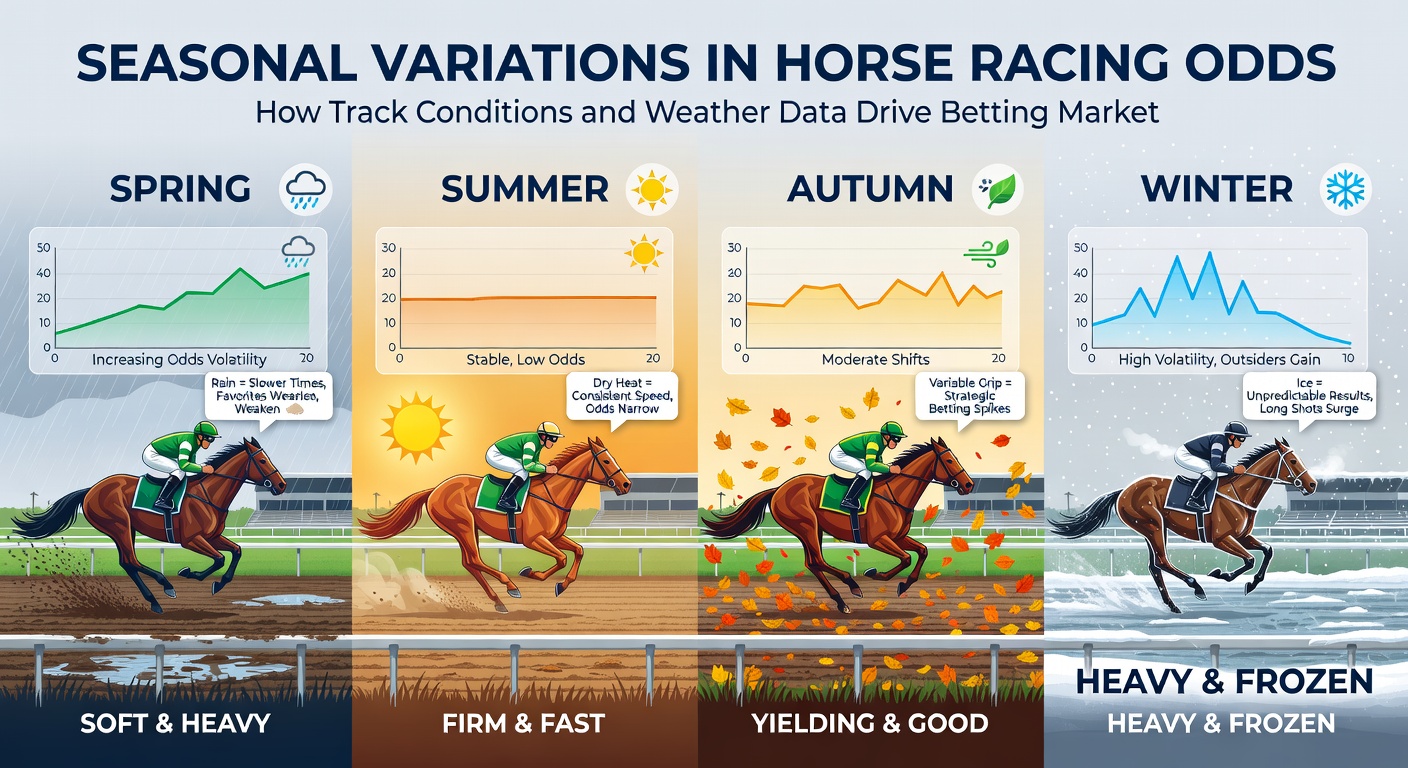
What's interesting is how forecasters' accuracy improvements over the past decade have tightened these feedback loops, so that odds on afternoon races now incorporate morning rainfall totals almost instantaneously. Observers tracking transatlantic markets note similar patterns, with US tracks using National Weather Service alerts to anticipate surface changes that affect sprint versus route horse suitability. The result appears in narrower spreads between morning lines and starting prices whenever reliable weather data arrives early enough for punters and layers alike to react.
Examples from Recent Campaigns and May 2026 Observations
Take one major UK flat meeting where an unexpected warm spell in late April produced firmer ground than seasonal averages, allowing several lightly raced colts with proven fast-surface form to shorten dramatically in the betting. Data from that period revealed that horses with turf sprint records on good or faster surfaces captured a higher percentage of prize money than their starting prices implied, prompting layers to tighten quotes on comparable runners in subsequent fixtures. Parallel trends emerged at Australian tracks during their winter carnival, where heavier rainfall patterns lengthened odds on speed horses while compressing them for proven wet-track performers.
In May 2026 several northern hemisphere tracks recorded above-average spring rainfall that kept surfaces softer longer than usual, shifting market emphasis toward horses with proven records on good-to-soft or softer ground. Figures released by regional racing authorities showed measurable increases in the proportion of races won by stayers and mud specialists, a development that bookmakers had already priced into ante-post markets once long-range forecasts indicated sustained moisture. These adjustments illustrate how seasonal anomalies, once confirmed by verified weather stations, translate directly into revised probabilities that circulate across global betting platforms.
Conclusion
Seasonal variations in track conditions and weather data create predictable yet dynamic influences on horse racing odds because they alter the physical parameters within which each race unfolds. Research consistently shows that markets respond to these inputs through systematic incorporation of historical surface statistics and live meteorological updates, producing price movements that reflect genuine shifts in winning probabilities. As climate patterns continue to exhibit greater variability, the reliance on precise weather and going data is expected to grow, keeping odds compilers and bettors alike focused on the same environmental signals that determine which horses hold the strongest edges on any given day.