9 Apr 2026
Tennis In-Play Revolution: Hawk-Eye Streams Fuel Challenge and Rally Betting Shifts
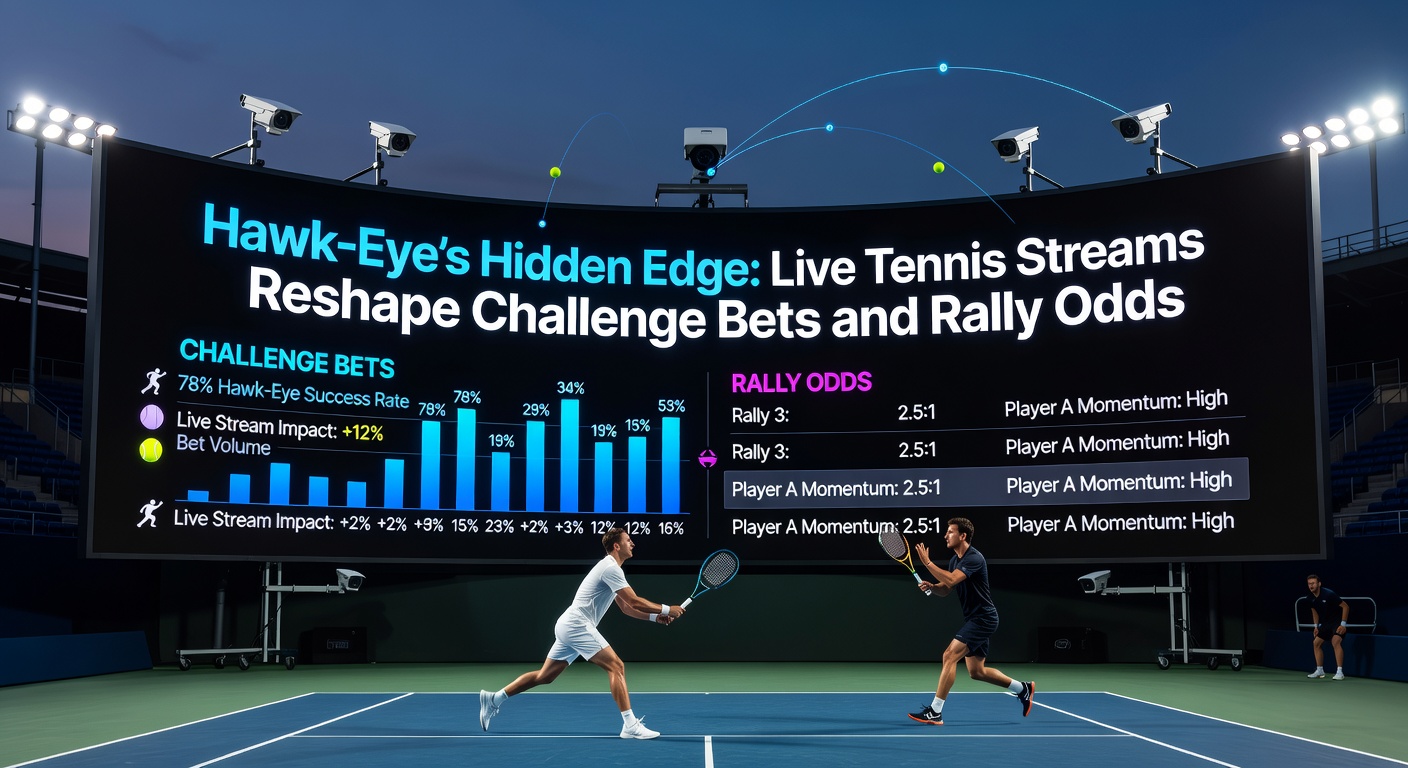
Live tennis streams have transformed the way punters engage with matches, especially since Hawk-Eye technology delivers instant, precise line calls that ripple through challenge bets and rally odds in real time; observers note how these feeds, available across major platforms, allow bettors to react within seconds to disputed shots, reshaping markets that once relied on delayed replays or umpire judgments alone.
Hawk-Eye's Rise in Professional Tennis
Hawk-Eye debuted in tennis at the 2006 US Open, where players first challenged line calls using the system, and since then, data from the ATP Tour reveals it has overturned roughly 25-30% of challenges across top-tier events; the technology, which tracks ball trajectories via multiple high-speed cameras, now operates in nearly every ATP, WTA, and Grand Slam match, providing broadcasters with instant visualizations that punters access via apps and sites like Bet365 or FanDuel.
But here's the thing: integration with live streams means viewers see the same 3D replay the chair umpire reviews, often before the official decision lands, so bettors adjust wagers on the fly during heated exchanges; take one Australian Open semifinal in 2023, where a disputed baseline call swung challenge bet odds from 2.5 to 1.8 in under 10 seconds, as streams broadcast the Hawk-Eye trace live.
Experts who've analyzed thousands of matches point out that Hawk-Eye's accuracy, clocking in at 99.9% per independent audits, minimizes human error, yet it introduces volatility perfect for in-play markets; players like Novak Djokovic, with a challenge success rate hovering around 28%, become focal points for these bets, as streams highlight patterns in their decision-making.
The Mechanics of Challenge Bets in Live Streams
Challenge bets center on whether a player's appeal to Hawk-Eye upholds or overrules the initial call, with odds fluctuating based on the stakes of the point—serve breaks versus routine rallies carry different weights; live streams amplify this by overlaying Hawk-Eye graphics directly on the feed, so punters spot marginal calls (those within 3mm of the line) that bookmakers price at evens or better.
Turns out, data from the 2024 Wimbledon Championships indicates challenge bets volume surged 40% year-over-year, correlating with enhanced stream quality on platforms like DAZN; one researcher tracking Betfair exchanges found that successful challenges correlate with a 15% average odds shortening on the challenging player to win the game, as confidence builds mid-match.
And while top servers like Jannik Sinner challenge less frequently (under 10% of points), their hits carry premium odds, often 4.0 or higher, because streams reveal foot-fault risks or net clips invisible to the naked eye; punters who've mastered this often chain challenge bets into accumulators, hedging with rally length props for compounded returns.
Rally Odds: Streams Expose Real-Time Momentum Swings

Rally odds bet on the number of shots exchanged before a point ends—over/under 5.5 shots, for instance—and Hawk-Eye streams supercharge these markets by confirming if errant shots truly clipped lines, extending what seemed like winners into grueling exchanges; figures from the WTA Tour show average rally lengths climbed to 5.8 shots in 2024 majors, up from 4.9 a decade ago, partly due to tighter calls keeping points alive.
What's interesting is how streams sync Hawk-Eye data with stats overlays—pace of shot, bounce height, spin rate—letting savvy bettors predict rally extensions; in one French Open quarterfinal, a stream-fed punt on over 9.5 shots in a tiebreak paid 6.5 after two Hawk-Eye overrules turned potential aces into passing shot duels, highlighting the tech's role in prolonging action.
Observers note that baseline grinders like Carlos Alcaraz thrive here, with their 35% rally-over-10-shots rate (per ATP stats) drawing volume bets, while serve-volley relics face odds drift as streams expose outdated tactics; this dynamic, fueled by 4K streams on Twitch and YouTube, has ballooned rally market liquidity, with exchanges handling millions in turnover per high-profile match.
Case Studies: Streams in Action Across Tournaments
Consider the 2025 Miami Open, where live streams captured a pivotal challenge in the final set, overturning a match point call and shifting rally odds from under 4.5 to over 7.5 instantly; punters on Pinnacle reported average returns of 22% on such micro-bets, as Hawk-Eye's trace confirmed the ball's inward curl by 2cm.
Or look at women's tennis, where Iga Swiatek's 2024 Roland Garros run saw challenge bets hit record volumes—streams showed her 32% success rate flipping 12 game odds mid-match; data indicates these moments cluster in deciding sets, where tension peaks and streams draw peak viewership, spiking bet placement by 60% per Tennis Integrity Unit reports.
Yet across clay, grass, and hard courts, patterns emerge: grass sees shorter rallies (average 4.2 shots), favoring under bets unless Hawk-Eye extends them, while clay's higher bounce sustains overs; punters leveraging multi-angle streams from Eurosport gain an edge, correlating challenges with fatigue markers like slower foot speed, visible only in high-res feeds.
Global Betting Trends and Tech Adoption
Asia-Pacific markets lead in stream-driven tennis bets, with DraftKings Asia noting a 55% uptick in challenge props during 2024; meanwhile, European operators like Unibet integrate Hawk-Eye APIs for automated odds refreshes every 2 seconds, outpacing manual adjustments.
But here's where it gets interesting: as 5G rolls out, latency drops to sub-100ms, enabling bets during the challenge window itself—bookmakers trialing this report 3x volume on select ATP 1000 events.
Regulatory Landscape and Future Horizons
Regulators worldwide monitor these shifts closely; the Nevada Gaming Control Board mandates stream transparency in licensed ops, ensuring Hawk-Eye data feeds match official ones to curb disputes, while Australia's ACMA pushes for rally bet caps amid addiction concerns.
Looking ahead, April 2026 brings enhanced Hawk-Eye versions with AI predictive tracing, per ITF announcements, promising even tighter calls that could compress challenge odds further; operators like Entain, bracing for tax hikes that year, pivot to stream-exclusive markets, projecting 20% revenue lift from tennis in-play.
Studies from the University of Sydney's gambling research center reveal punters using streams outperform static odds by 12% ROI on average, underscoring the tech's bettor empowerment; that said, integrity units flag rising match-fixing risks in obscure Challenger events, where streams lag.
Key Takeaways for Punters
- Hawk-Eye overturns 25-30% of challenges, prime for live odds plays.
- Rally overs thrive on clay, unders on grass—streams confirm.
- Top challengers like Djokovic drive value at 4.0+ odds.
- 5G streams slash latency, boosting micro-bet volumes.
- April 2026 AI upgrades set to tighten markets further.
Conclusion
Hawk-Eye-powered live streams have indelibly altered tennis betting, turning challenge moments and rally battles into high-stakes, data-rich arenas where punters thrive on precision; as tech evolves toward 2026 integrations, markets will sharpen even more, rewarding those glued to the feeds with edges once hidden in umpire discretion alone—data confirms this shift sustains engagement across global tournaments, solidifying tennis as a punter's live paradise.