Esports Data Streams Unlock Live Predictive Models for In-Match Bettors
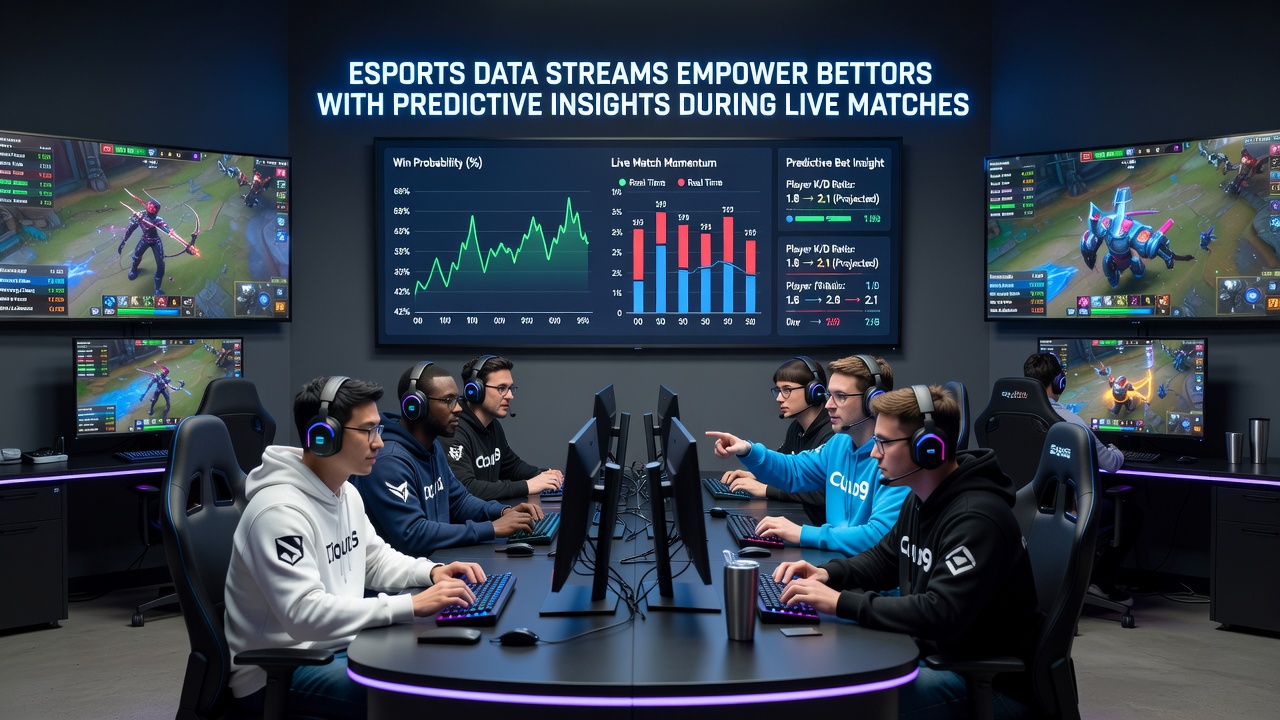 Data streams from major esports titles now feed directly into betting platforms, allowing real-time calculation of probabilities that shift with every in-game event. These pipelines pull player positioning, resource counts, kill-death ratios, and objective control metrics at intervals as short as 200 milliseconds, then route the information through algorithms that update odds for markets such as next objective or round winner. Observers tracking the sector note that participation in esports wagering grew steadily through the first half of 2026, with several platforms reporting increased volumes during international tournaments held in July. The combination of high-frequency telemetry and machine-learning models lets operators adjust lines faster than traditional sportsbooks can manage with slower data sources.
Telemetry Sources and Integration Methods
Game publishers expose application programming interfaces that deliver structured JSON packets containing coordinates, health values, and cooldown timers for every participant on the map. Third-party aggregators collect these packets, normalize them across titles such as League of Legends and Counter-Strike 2, then forward cleaned datasets to licensed betting operators. Integration occurs through secure sockets that maintain sub-second latency even when thousands of concurrent users query the same match.
Operators combine the incoming telemetry with historical performance databases to generate conditional probabilities. For instance, when a team loses map control in the mid lane of a MOBA title, the model recalculates the likelihood of the opposing squad securing the next dragon objective within the following ninety seconds. Bettors receive these updated figures through in-play interfaces that refresh without manual intervention.
Predictive Models in Action During July 2026 Events
During the July 2026 Mid-Season Invitational, several European operators published live win-probability graphs that moved in tandem with objective captures. One documented sequence showed a 14-percentage-point swing in under forty seconds after a single team fight concluded, illustrating how granular data alters risk assessments in real time. Similar patterns appeared in Valorant matches where spike-plant success rates shifted after each round based on economy and utility usage tracked by the data feed.
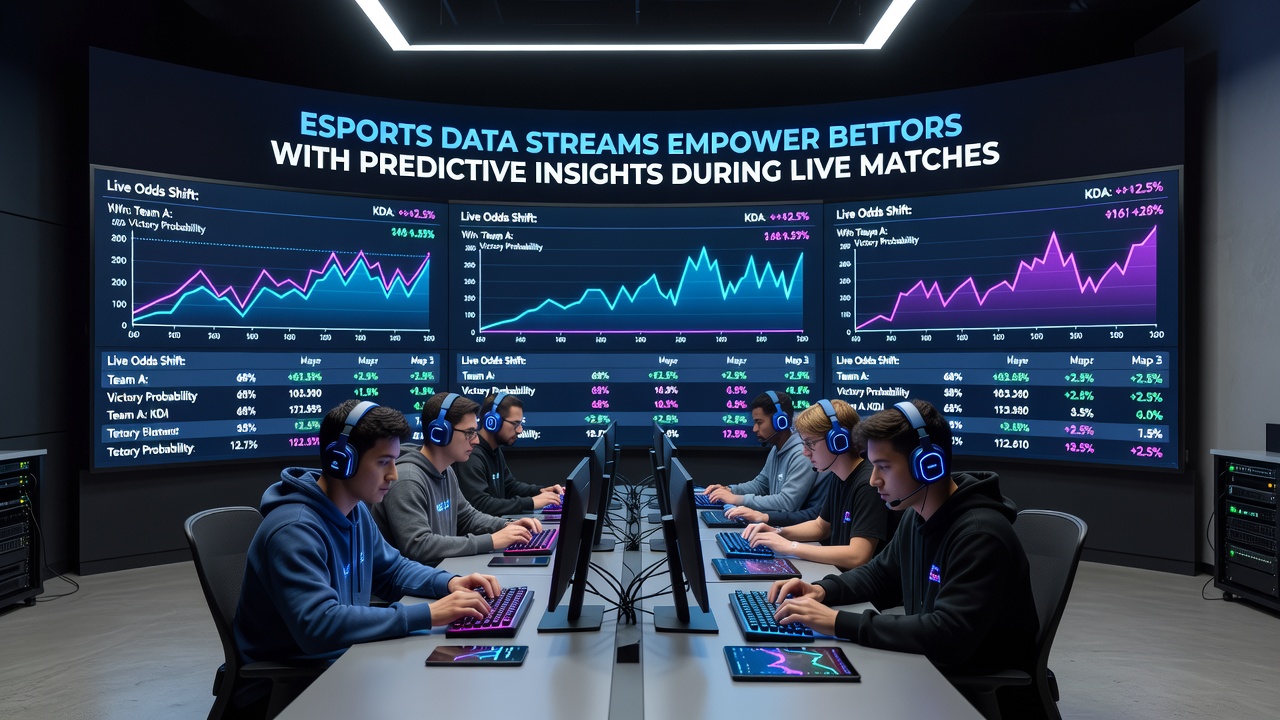
Research from the University of Nevada, Las Vegas gaming laboratory examined 12,000 esports matches across 2025 and early 2026, finding that models incorporating live positional data outperformed static pre-match forecasts by margins ranging from 8 to 19 percent depending on game title. The study, published through the university's International Gaming Institute, highlighted that accuracy gains were largest in titles with high objective density such as Dota 2.
Regional Regulatory Approaches
Outside the United Kingdom, regulators in Malta and the Australian state of New South Wales have issued guidance requiring operators to disclose when live data streams influence odds. The Malta Gaming Authority updated its remote-gaming directives in late 2025 to mandate audit trails for any algorithmic adjustment triggered by in-match telemetry. Australian authorities followed with similar reporting obligations that took effect in March 2026, focusing on transparency for consumers rather than restricting data use.
Industry groups such as the Esports Integrity Commission maintain separate monitoring programs that cross-reference official game logs against betting-market movements. When discrepancies appear, the commission issues alerts to member operators and shares findings with regulators in multiple jurisdictions. These efforts aim to maintain market integrity while permitting continued development of predictive tools.
Technical Infrastructure Supporting Real-Time Updates
Cloud providers host the core processing clusters that ingest telemetry, apply feature-engineering steps, adn output probability vectors. Redundant nodes located in geographically distributed data centers ensure continuity if one region experiences latency spikes. Operators typically maintain service-level agreements specifying maximum delay of 800 milliseconds between an in-game event and the corresponding odds revision visible to users.
Security protocols include end-to-end encryption of data packets and rate-limiting on API endpoints to prevent overload during peak tournament hours. Some platforms also deploy anomaly-detection layers that flag unusual betting patterns coinciding with sudden data shifts, allowing compliance teams to review activity before settlement.
Future Developments in Data Granularity
Engineers continue to refine sensor-level capture within game clients, adding variables such as mouse-movement heatmaps and voice-chat activity indicators. While these additions remain under testing, preliminary trials conducted by North American tournament organizers suggest they could further tighten prediction intervals for micro-markets like next-kill timing. The Interactive Games & Entertainment Association of Australia released a 2026 white paper outlining potential standards for sharing such enriched datasets across borders while preserving player privacy.
Conclusion
Esports data streams have become integral to live betting operations by supplying the raw material for predictive models that react to match events within fractions of a second. Regulatory frameworks in multiple regions now address transparency requirements without halting technical progress, while academic and industry research continues to quantify accuracy improvements. As telemetry resolution increases, the interval between on-screen action and updated betting lines